
A helicopter hangar is a big roof for a helicopter. It keeps it safe!
Different hangars, like open and closed ones, help you choose what’s best. This article talks about how to build helicopter hangars and what stuff is important. It also shares the good things about having a hangar, gives tips for keeping it nice, and shows how to make sure it works right!
Key Takeaways:
- A helicopter hangar keeps helicopters safe and handy.
- There are two types: open-sided and closed, each with cool benefits.
- When picking a hangar, think about size, place, and materials.
What is a Helicopter Hangar?
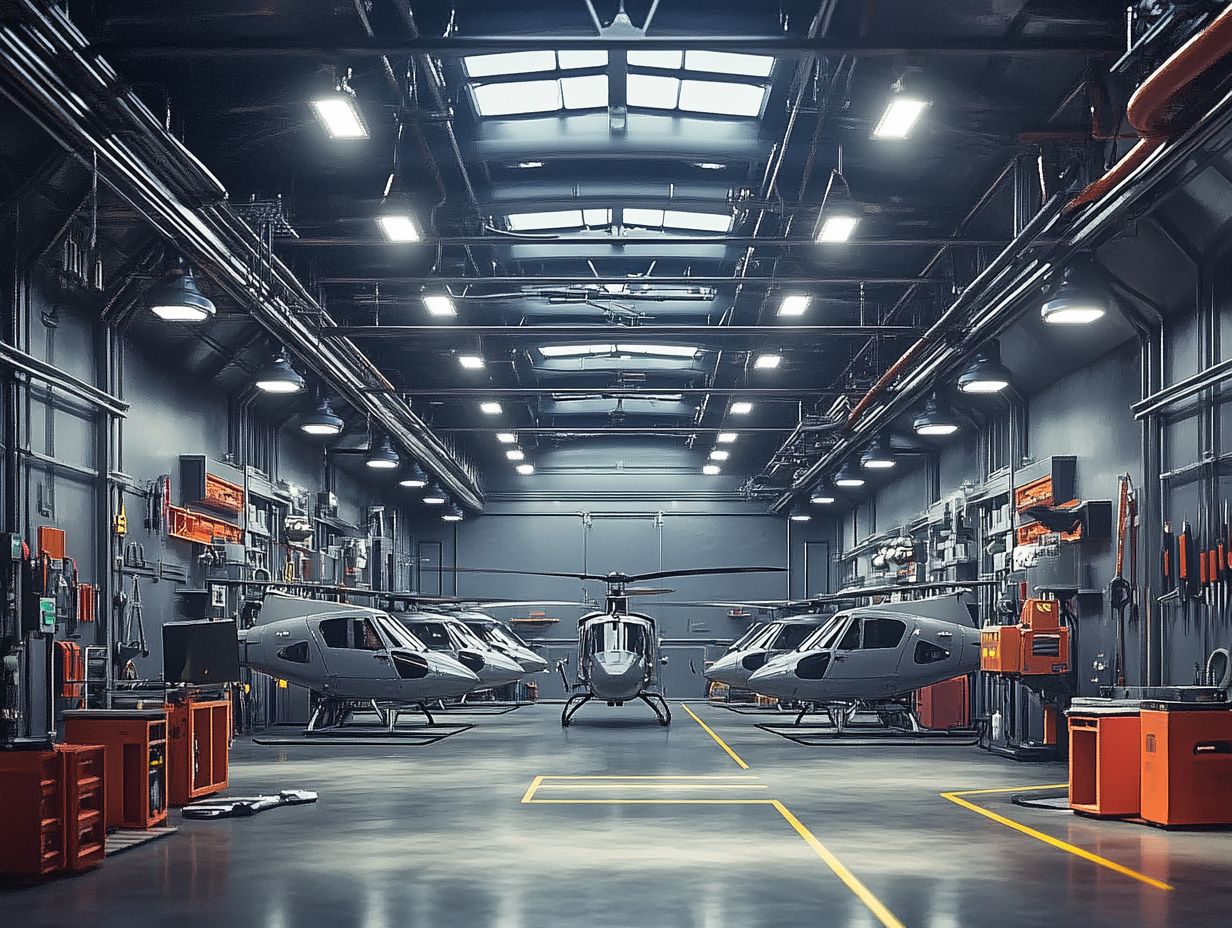
A helicopter hangar is a building. It keeps helicopters safe and dry from bad weather. These places not only keep planes safe but also help fix them, making sure they are ready to fly.
How helicopter hangars are built follows special rules to keep flying safe and easy. Exploring the historical development of hangars, including notable structures like the Goodyear Airdock and various military types, can give valuable insights into the evolution of these essential aviation facilities.
Different Kinds of Helicopter Hangars
There are different hangars. Each one helps with different things.
Some hangars are open-sided, making it easy for helicopters to come and go, while others are fully enclosed, providing enhanced protection and security for the aircraft. Each type serves its own unique purpose and is built with different design elements to address specific requirements, like space, accessibility, and safeguarding against the elements.
Open-Sided Hangars: Cool and Breezy!
Open-sided hangars have lots of air and let helicopters in and out easily. They are great for fast work and fixing things.
While they are good, there can be some bad stuff too, like not being great in bad weather. In areas prone to extreme weather, these hangars might not provide enough shelter against harsh elements, leaving helicopters exposed to rain, snow, and wind damage.
Additionally, open-sided configurations might not offer the best storage conditions for sensitive materials, which means careful planning is needed to meet various operational requirements.
Enclosed Hangars
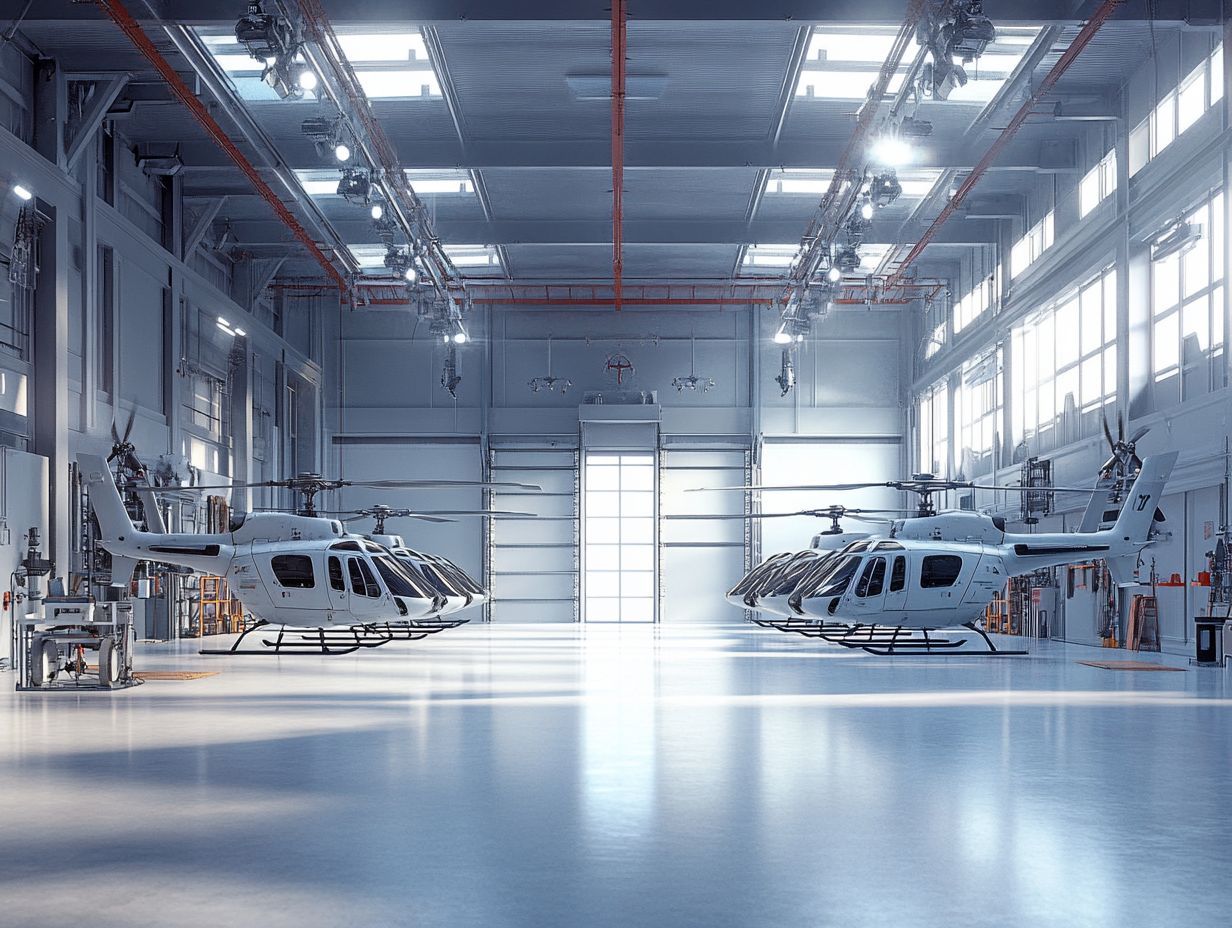
Closed hangars are strong and protect helicopters from bad weather. They are good for fixing stuff too. This setup helps keep temperature variations to a minimum, which is essential for the integrity of those sensitive components.
Beyond just climate control, these enclosed hangars also boost security, keeping valuable aircraft safe from theft and vandalism. On the flip side, open-sided hangars might look like a budget-friendly option at first glance, but they leave aircraft vulnerable to shifting temperatures and environmental factors, which can lead to faster wear and tear.
Sure, open designs can make quick inspections a breeze, but they can’t compete with the comprehensive maintenance capabilities that enclosed spaces offer. It’s clear there are some significant trade-offs to consider when it comes to design and construction choices.
Design and Construction of Helicopter Hangars
Building helicopter hangars needs careful thinking about things like materials and rules to keep everything safe and easy.
A good hangar is not just about fitting helicopters, it also helps save energy and makes fixing them easier.
Things to Think About When Making Hangars!
When making hangars, think about: 1. Type of helicopter. 2. Weather. 3. Repairs needed.
The size and shape of the hangar are super important for it to work well. For instance, if they’re dealing with larger helicopters—like those used for cargo transport or search and rescue missions—they’ll need more spacious areas with higher ceilings to fit those behemoths.
Weather where you are helps pick what the hangar is made of and how to build it. It’s essential that the hangar can handle all sorts of harsh elements, whether it’s snow, heavy rain, or fierce winds.
It’s super important that hangars are close to runways so moving around is fast, especially for emergencies.
Lastly, following safety rules is really important. This not only protects the aircraft but also ensures the safety of the personnel working inside and around the hangar.
Materials and Features
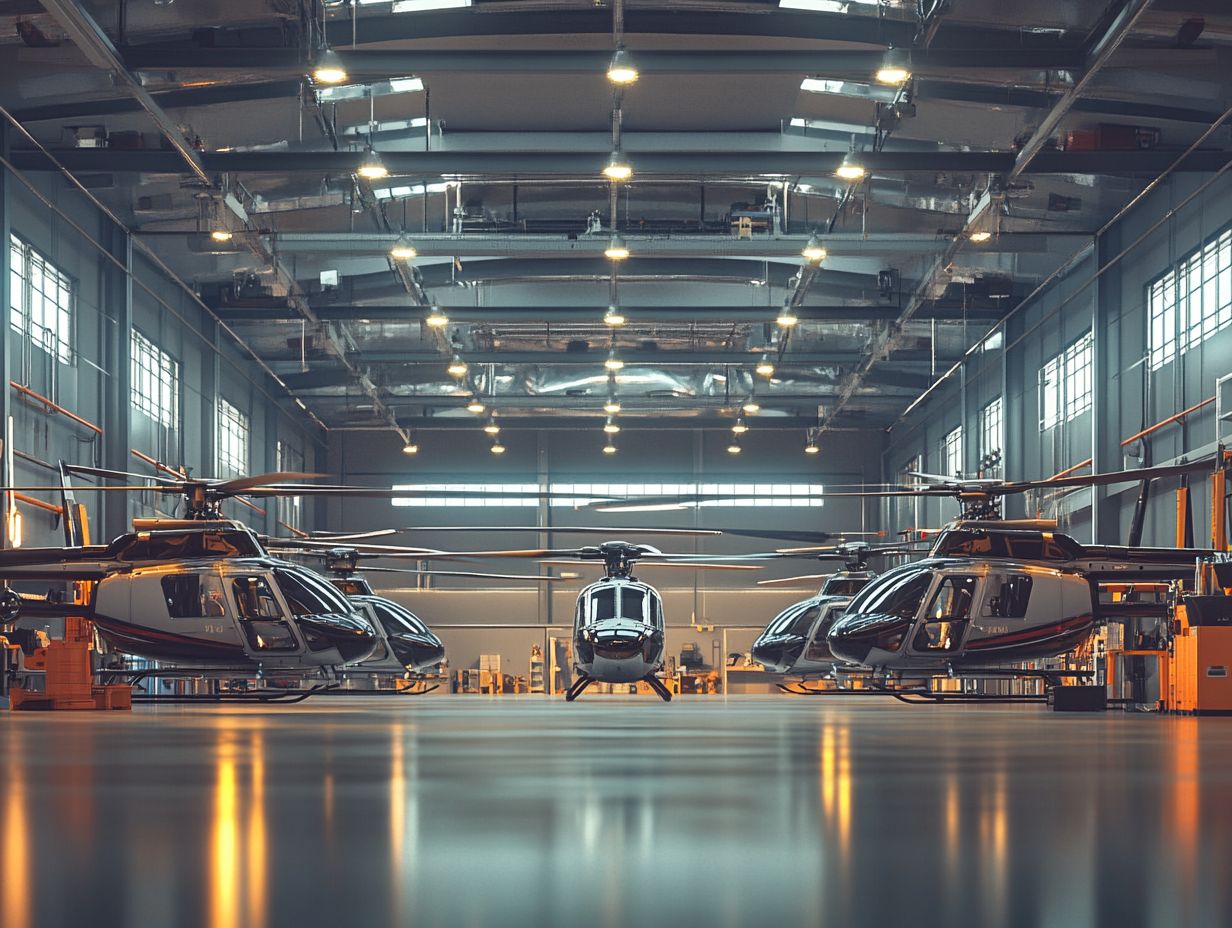
What the hangar is made of really matters for how long it lasts, saves energy, and works well. There are a few options on the table, including wooden structures, steel frames, and tensioned fabric designs.
Each material has good things and bad things. For example, wooden structures are known for their fantastic insulation properties but often need more frequent maintenance to fend off rot and pests.
On the flip side, steel frames offer incredible strength and longevity, making them perfect for larger hangars; however, they can be prone to corrosion if not properly treated. Then there are tensioned fabric designs, which are lightweight and customizable, making relocation a breeze. The catch? They might not provide the insulation necessary for extreme temperature control.
Adding good air flow systems helps keep the hangar comfy and working well. So, choosing the right mix of materials and features is essential for maximizing operational efficiency and longevity.
Why Having a Helicopter Hangar is Awesome
Having a hangar just for helicopters has a lot of good things.
It keeps helicopters safe from bad weather, makes fixing them easier, and gives a nice place to store them.
Staying Safe and Easy!
One big plus of a hangar is that it protects against tough weather. This keeps the aircraft in top shape and cuts down on maintenance and repair needs.
This kind of protection is especially important in areas that experience extreme temperatures, heavy precipitation, and strong winds, all of which can cause wear and tear on essential components.
With a dedicated indoor space, helicopter hangars not only guard the aircraft against the elements but also create a more controlled environment for technicians to carry out routine inspections and necessary repairs.
As a result, operators can boost their uptime since regular maintenance becomes quicker and easier without the interference of bad weather. These facilities ultimately help extend the aircraft’s lifespan, enhance safety standards, and contribute to smoother operations overall.
Choosing the Right Helicopter Hangar for Your Needs
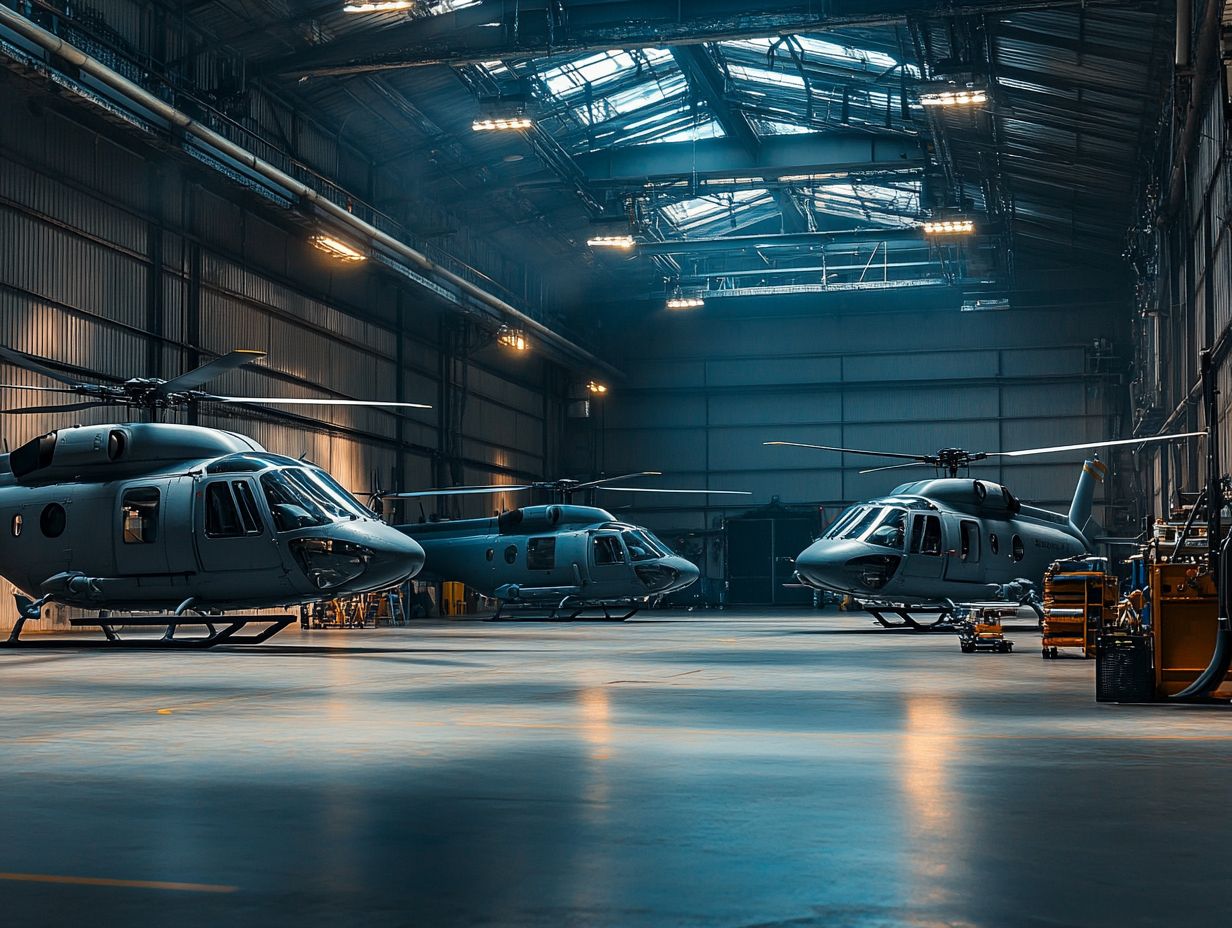
Picking the right hangar means looking at what you need, like what type of helicopter you have, how much you will use it, and how safe it needs to be.
They also need to take design and construction factors into account.
Things to Think About
When picking a hangar, think about these things: how it looks, how well it’s built, how much space you have, and where it is.
How close the hangar is to flying paths and fixing spots is super important for being quick and easy. A well-planned location can minimize transit time and boost safety, allowing for quicker responses in emergencies.
Things like door sizes, ceiling heights, and insulation are super important. They help the hangar fit different helicopters and deal with the weather.
Good building stuff makes the hangar last longer. It also means less fixing stuff later, which is great for owners.
How to Keep Your Helicopter Hangar Awesome
Keeping the hangar nice and fixing it up is super important. It helps it work well and last a long time.
Easy Tips to Keep Your Hangar Great!
To take care of the hangar, check things regularly. Fix stuff on time. Upgrade smartly! This keeps it safe and cool.
Getting some pros to fix little problems can stop big headaches and save money later.
Thinking about climate control is a good idea. It keeps the helicopters and gear safe from bad weather and helps them last longer.
Historical Overview of Helicopter Hangars
The story of helicopter hangars changed a lot. They show how flying stuff got better.
This evolution can be traced back to the early days of aviation when the demand for secure and efficient storage emerged alongside the promising potential of rotary-wing aircraft. During WWII, military innovation spurred the creation of specialized hangars that addressed the unique requirements of helicopters, marking a pivotal turning point.
The development of facilities for aircraft like the V-22 Osprey and AH-64 Apache led to influential designs that emphasized strength and functionality.
Military stuff and better materials helped make today’s helicopter hangars.