
Helicopter landing pads are really important spots where helicopters land and take off safely. They help in emergencies, for corporate travel, or for fun tours, like, you know?
This article talks about the different kinds of landing pads. We will look at ground-level ones and elevated ones, plus what to think about when building them. We will also talk about safety tips and how to keep them working well!
Readers can join in as they explore the intricacies of helicopter landing pads and discover their vital role in aviation.
Key Takeaways:
Hey! What’s a Helicopter Landing Pad?

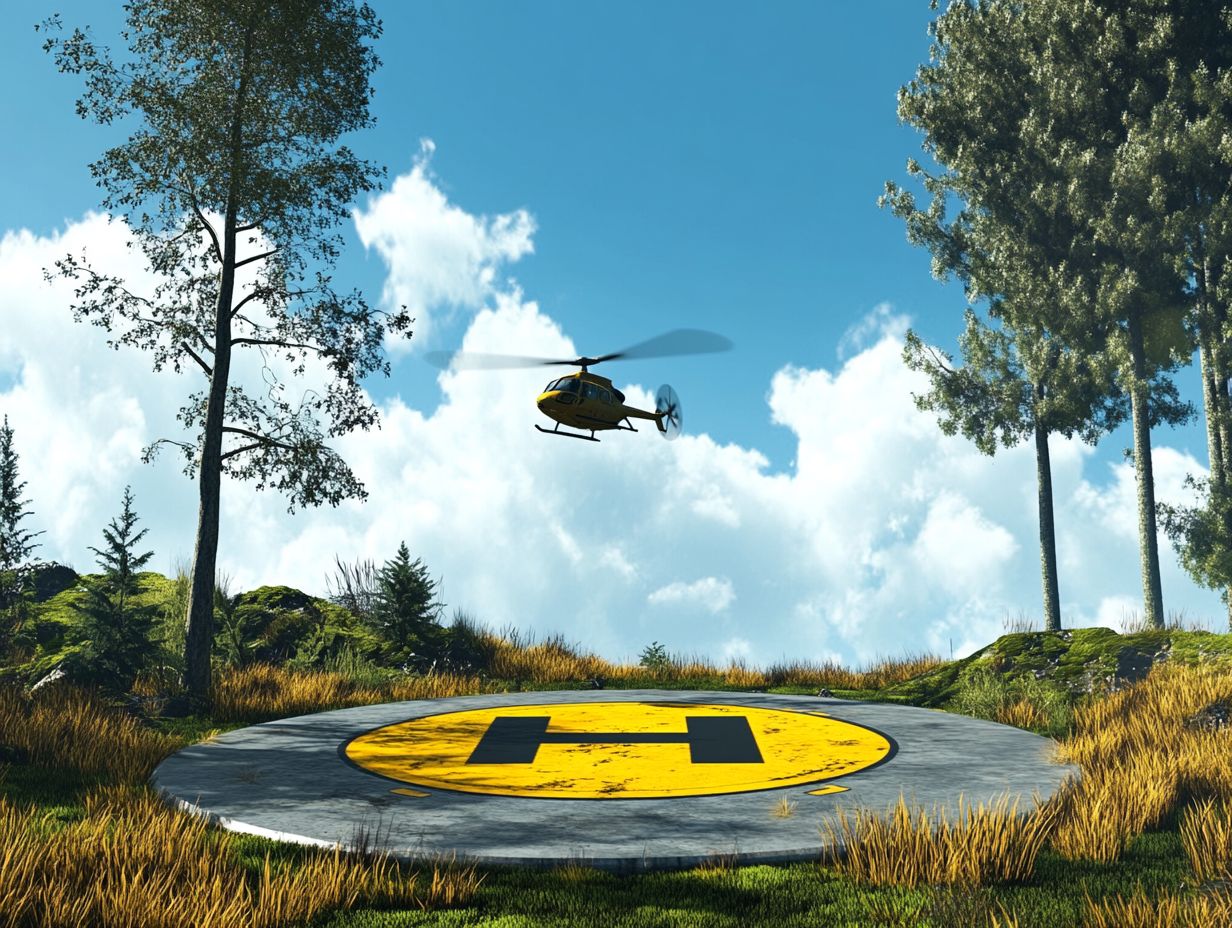
A helicopter landing pad, often called a helipad, is a specific spot meant for helicopters to land and take off. This can include various structures like heliports and helidecks.
These pads help helicopters work well. They are super important for things like helping people in emergencies and making sure they can land fast!
Types of Helicopter Landing Pads You Should Know!
Helicopter landing pads can be found in different shapes and sizes, mainly split into ground-level pads and elevated options like rooftop helipads and helidecks on offshore platforms.
Each type has its own specific purpose, whether it’s for urban transportation or maritime operations, and they cater to a diverse array of helicopter services.
Ground-level Pads
Ground-level pads are, like, super easy to get to. They are often near hospitals or in fields. They help ambulances and other helicopters take off and land!
These pads typically have a flat, durable surface that can handle the weight of various helicopter models, and they’re marked with clear, visible identifiers to help with safe navigation.
Regarding construction, it’s important to ensure there’s enough space for both the helicopter and ground personnel, along with implementing safety features like perimeter fencing and lighting.
In emergency medical situations, ground-level helipads are crucial. They allow rapid response teams to deploy quickly, making sure patients get immediate care. By providing streamlined access for helicopters, these facilities play a vital role in saving lives during critical moments.
Elevated Pads

Elevated pads, like rooftop ones, are found in cities and on ships. They are great for helping helicopters land in busy places!
These platforms are key players in urban air mobility, and it’s all about striking the right balance between operational efficiency and safety. However, elevating access points comes with its own set of challenges, including the need to follow strict regulatory requirements for their construction and use.
Designing these pads requires incorporating robust safety features, like proper weight support and escape routes, to manage potential risks during emergencies.
On the bright side, elevated pads can significantly cut down travel time for critical services, such as medical emergencies and logistical support, making them a game changer in crowded areas.
By integrating advanced technologies, these pads are also adapting to accommodate electric vertical takeoff and landing (eVTOL) aircraft, which further boosts urban transportation networks.
Design and Construction of a Helicopter Landing Pad
Making helicopter landing pads needs good planning and following rules to keep everything safe for flying!
This ensures that each helipad can meet the specific requirements of helicopters, such as weight limits and operational safety standards.
It’s all about creating a safe and functional space for those flying machines!
Things to Think About When Making a Landing Pad!
So, when someone makes a helicopter landing pad, there are some big things they need to think about. They gotta think about how much helicopters weigh, safety stuff like lights and signs, and what’s around it so the landing and taking off is safe.
Where the pad goes is super important. Like, how easy it is to get to, how close it is to help, and any stuff like buildings or trees can change how the helipad works.
Also, it’s really important to think about how it affects the environment, like noise rules and where animals live that might get bothered by helicopters.
Helicopters have specific needs, like how big the rotor is and how the landing gear fits. You gotta plan carefully to make sure they work well and are safe when they fly.
Rules and What You Need
Following the rules is totally super important when making a helipad. The people in charge make sure all helipads are safe and work well, especially for emergencies and air ambulances.
These rules cover a lot, like how strong the pad is, where it is, and stuff around it that might affect how helicopters work.
For emergency stuff, following these rules is super important because they help save time and make sure help gets there fast.
Safety Stuff for Helicopter Landing Pads
So, this means having good lights, clear signs, and solid emergency plans that help pilots land and take off safely.
Good lighting and clear signs are really important, like, for sure, for keeping helicopter landing pads safe.
They help people see better during the day and night, making it easier for pilots to find safe places to land.
These lights are super bright LED lights that use less power and last a long time compared to regular bulbs.
Clear signs are really important! They show where the helipad is and help keep things from going wrong.
What to Do in Emergencies

Having good emergency plans for helicopter pads is super important. These plans help everyone act fast and stay safe when something unexpected happens.
When things like medical emergencies, fires, or broken helicopters happen, having a good plan helps people act quickly and keep everyone safe.
The staff needs good training to know what to do in different emergency situations.
This means doing drills that act out real emergencies so everyone can practice their jobs and feel ready.
Talking well during these drills is super important for teamwork and helps everyone react faster, keeping everyone safe in helicopter work.
Taking Care of Helicopter Landing Pads
Regularly taking care of helicopter pads is super important to keep them safe and working well.
They need to be checked often and fixed up to deal with wear and tear and stuff that might cause problems.
Keeping these pads in good shape is super important for smooth flying and safety up there.
Checking and Fixing Stuff Regularly
You gotta check and fix the landing pads a lot. This keeps them safe for helicopters to land.
You should check them every three months or after big storms. This helps find problems like cracks or water.
If you find cracks, you might need to fix them by filling, patching, or even rebuilding some parts.
Don’t forget to write down what you find when you check. This way, you can see if things get worse. Fixing stuff makes it safer and helps the pads last longer so they’re ready for helicopters anytime.
You know, things like the weather and ground stuff to think about
You know, things like the weather and land around the pads matter a lot for keeping them working right.
You really see these problems when the weather is bad a lot. Rain, snow, fog, or strong winds can make the pads slippery or hard to see.
To fix these issues, it’s super important to check the pads often and fix them quick. Setting up weather checks helps keep things safe for flying and helps keep pilots and passengers safe.