
Hey, do you wanna know about cool helicopters? This article will help you learn about flying, like how helicopters work and what to do in emergencies.
You will find out what is fun and hard about flying a helicopter. You will also learn how to get ready to fly and what you need to do to be safe.
Key Takeaways:
What is a Helicopter?

A helicopter is a really cool flying machine that has spinning blades to go up in the air, which is way different from regular planes. Its unique design allows for vertical takeoff and landing, which means helicopters can operate in tricky environments where traditional aircraft just can’t cut it.
They’re super important in lots of fields like emergency medical stuff, taking cool pictures from the sky, putting out fires, and flying in mountains, showing how flexible and useful they are for many flying jobs.
In terms of structure, a helicopter is made up of key parts like the rotor system, fuselage, tail rotor, and avionics. Each of these components plays an important role in ensuring safe flight.
For example, the rotor system generates lift with its spinning blades, while the tail rotor provides stability and helps with directional control.
There are flight training programs designed specifically to prepare aspiring pilots with helicopter lessons that cover both the theory and practical skills they need. Pursuing a career in this field can open up a world of opportunities, from search and rescue missions to roles in law enforcement, giving individuals a chance to make a real difference in their communities.
Benefits and Challenges of Flying a Helicopter
Flying a helicopter has lots of awesome stuff, like going to tough spots super fast!
However, aspiring helicopter pilots have their share of hurdles to jump over, including tough flight training, grasping aviation safety protocols, and ticking off those FAA-approved certification requirements.
The flexibility of helicopters is a total game-changer, letting them get to spots that fixed-wing planes just can’t, which makes them super important for search-and-rescue missions or carrying stuff to hard-to-reach places. This unique ability is paired with the rapid response feature, letting pilots quickly adapt to ever-changing situations.
Still, the journey to becoming a certified helicopter pilot isn’t a walk in the park, you know? It demands not just a financial commitment but also extensive training flights and the need to earn multiple certification ratings, all while navigating a maze of regulations.
The helicopter industry calls for highly skilled professionals, which adds both allure and pressure to anyone looking to dive into a career in aerial operations.
Basic Principles of Helicopter Flight
Knowing how helicopters fly is super important if you wanna be a pilot. At the heart of it are concepts like aerodynamics and control, which determine how helicopters navigate through the skies.
This means grasping how rotor blades create lift, recognizing the effects of weight and balance, and knowing the importance of mastering flight maneuvers.
All of these elements are vital parts of any FAA-approved pilot program.
Aerodynamics and Controls
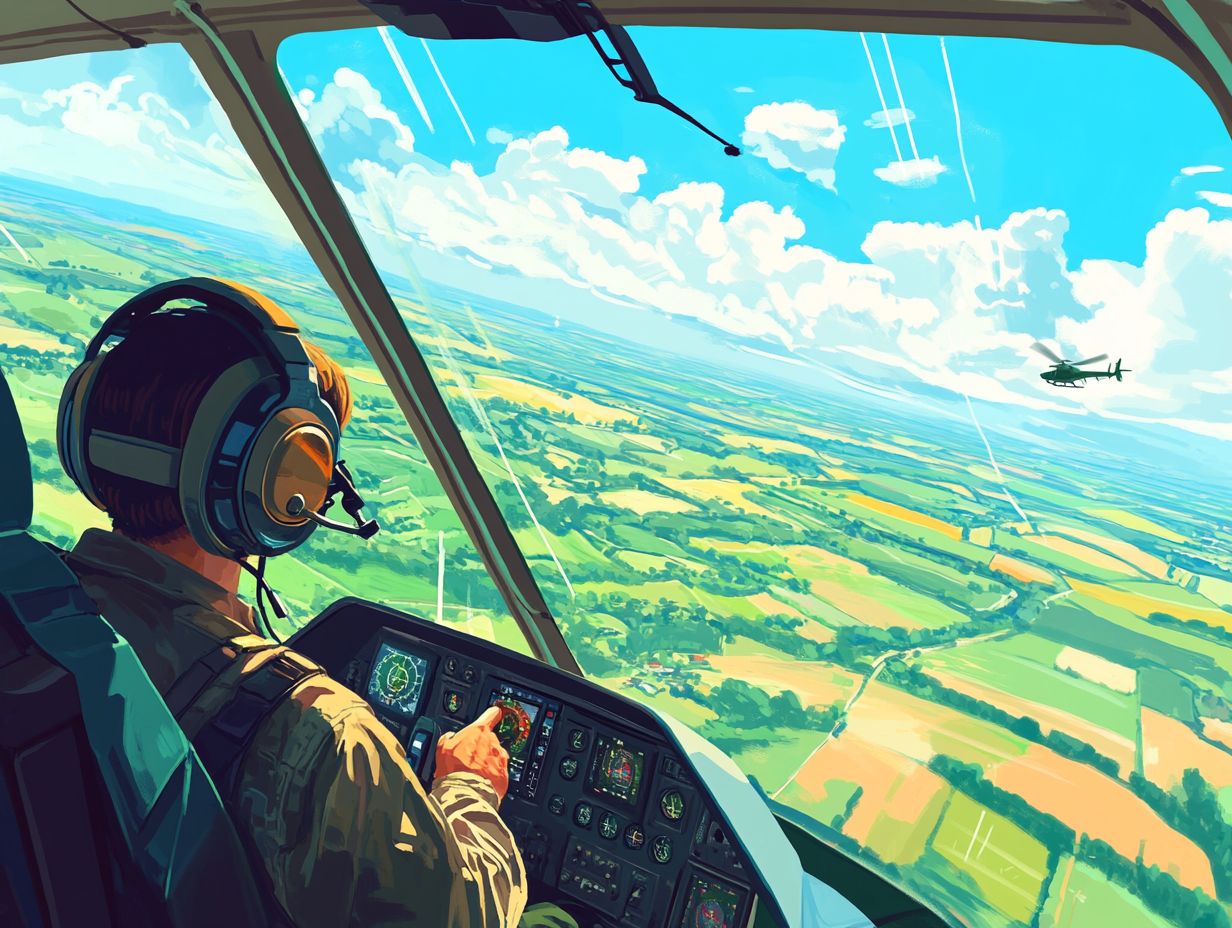
Aerodynamics are super important for how helicopters fly, affecting how the aircraft acts in different conditions, which is kinda cool. For a pilot in training, grasping the forces at play—like lift, weight, thrust, and drag—is essential.
You gotta learn how to use the helicopter controls, like the cyclic and collective, to fly it right.
Like, the spinning blades lift the helicopter up and the tail helps it stay straight and go the right way.
These forces work together in a cool way. Like, the lift from the rotor blades needs to be stronger than the weight for the helicopter to go up. And the thrust from the rotors pushes against drag to keep it moving forward.
Pilots use the cyclic control to tilt the rotor disc and turn. They also use the collective to change the pitch of the blades, which helps them go up or down.
Flight simulators are super helpful for future pilots. They let learners practice cool moves without any danger.
By practicing real-life stuff over and over, they can get better at understanding how flying works and get really good at controlling the helicopter. This builds their confidence and skills for real flying.
Getting Ready to Fly
Getting ready to fly is super important for anyone who wants to be safe and fly well in a helicopter. This process involves thorough inspections and safety checks of the aircraft, which are vital for spotting any potential issues that could impact performance during flight.
Helicopter training highlights the significance of these procedures, getting student pilots ready for real-world flying situations and helping them uphold aviation safety standards.
Checking Things and Staying Safe
Checking things and making sure everything is safe are super important parts of flying helicopters. They help pilots follow the rules and stay safe. These thorough examinations cover various components of the helicopter, including the rotor system, hydraulic systems, and fuel levels, and are essential for pilots to perform before each flight to guarantee operational safety.
During pre-flight preparation, pilots carefully evaluate critical elements like electrical systems, navigation equipment, and emergency gear. These inspections are not just a regulatory checkbox—they’re crucial for maintaining a pilot’s certifications and keeping their operational status valid.
By checking these parts carefully, pilots help make a safety culture in flying, where a good eye for detail can help stop accidents from happening. Successfully completing these rigorous checks is vital for renewing licenses and meeting the standards set by governing bodies, ultimately boosting the overall reliability of helicopter missions.
Flight Maneuvers and Techniques
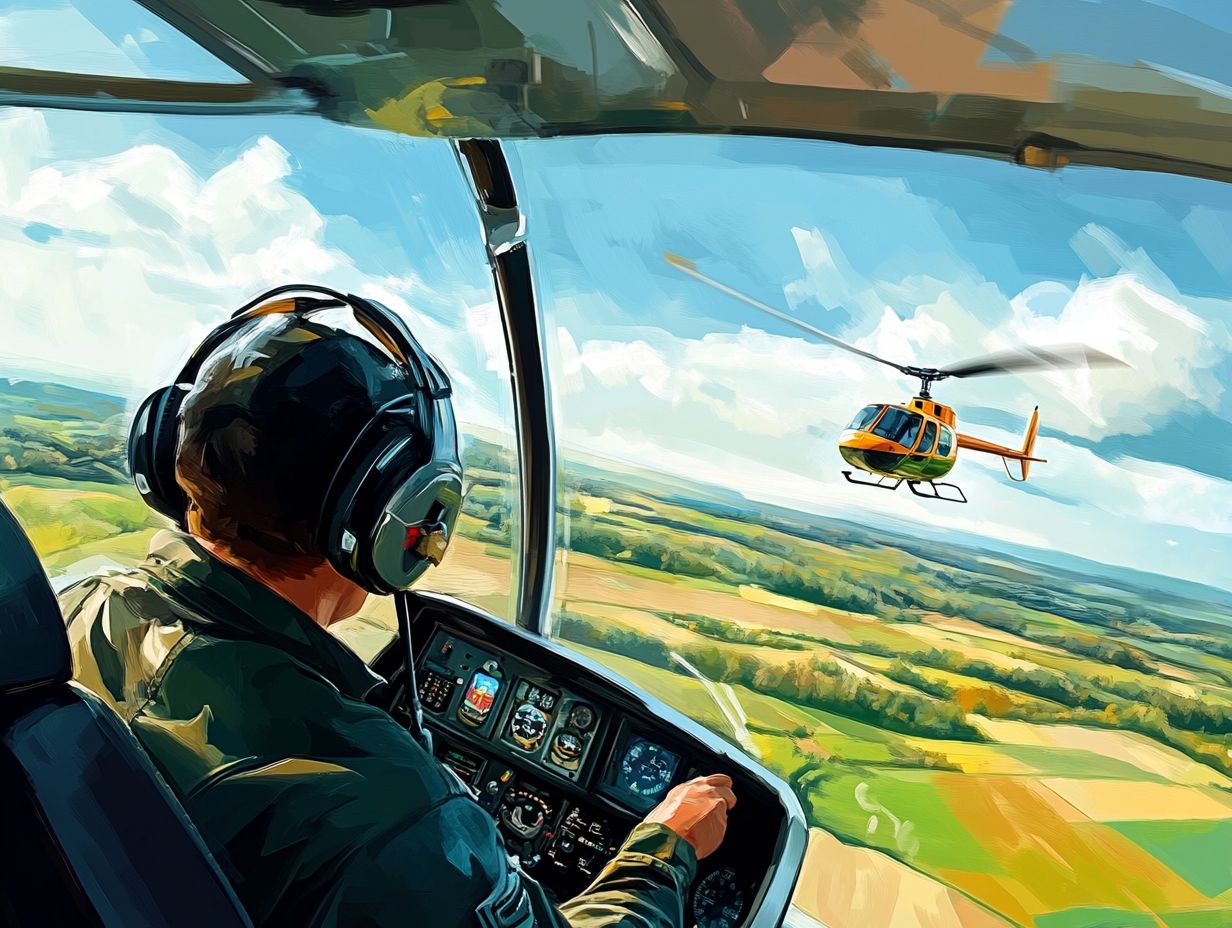
Getting really good at flying moves and tricks is super important for any helicopter pilot. These skills are key for flying safely and well.
Key maneuvers include takeoff and landing, which demand precise control and coordination.
Then there’s hovering and forward flight, which really test a pilot’s ability to handle the helicopter’s dynamics in different flight conditions.
Takeoff and Landing
Taking off and landing are super important parts of helicopter flying, and they need the pilot to be really skilled and careful. These maneuvers demand a solid understanding of the aircraft’s performance characteristics and strict adherence to aviation safety protocols. If improper techniques are used, it can lead to accidents and put the flight crew and passengers in danger.
Flight instructors play a pivotal role in teaching new pilots all the essential knowledge and techniques. They emphasize how important thorough pre-flight checks are and the need for real-time decision-making. Instructors cover factors like weight distribution, wind conditions, and ground effect, which all have a significant impact on the helicopter’s performance.
During training, aspiring pilots get plenty of practice with specific protocols for setting power levels, maintaining a stable hover, and executing controlled descents, all while keeping safety as their top priority.
This comprehensive training ensures that pilots are fully prepared to tackle any challenges that might crop up during these crucial phases of flight, ultimately contributing to safer aviation operations.
Hovering and Forward Flight
Hovering is a unique skill that sets helicopters apart from other aircraft, allowing them to stay in one spot above the ground. This maneuver requires a delicate balance of control inputs and is a crucial part of flight training. In terms of transitioning into forward flight, there are its own challenges, demanding skilled handling of the helicopter’s controls to keep everything stable and on speed.
To get good at hovering, students look at throttle stuff, change cyclic and collective things, and see how wind messes with the helicopter. In helicopter classes, teachers say muscle memory and coordination are super important. They help students with pretend flying games to get better.
As learners get better, they practice going from hover to flying forward. They try to move smoothly so they don’t drop down or go sideways. This gradual shift not only tests their control manipulation but also reinforces important concepts like trim and airspeed management. In the end, it lays a solid foundation for safe, proficient flying.
What to Do in Emergencies

Emergency stuff is super important in helicopter training, like, for real! It helps pilots know what to do when things get crazy.
When pilots get these procedures, they can make flying safer by knowing what to do for problems like engine fails or sudden weather changes.
This prep makes sure everyone on board, both crew and passengers, have a safer flight experience.
Handling Common Emergencies
Pilots see common emergencies when flying helicopters. Knowing what to do can change a scary moment into a safe landing. Scenarios like engine failure, fuel exhaustion, and navigating tricky weather conditions are just part of the job.
Good flight training has pretend flying and real practice that helps pilots handle these problems, you know?
These training programs say it’s super important to make fast choices and have a mental checklist for emergencies. Flight teachers put students in real situations, showing them how to look for risks and stay calm.
For example, if an engine fails, pilots learn to find the best places to land while going down safely. Understanding fuel management helps them avoid running out of fuel mid-flight, and getting familiar with weather patterns ensures they take precautionary measures during bad weather.
This mix of book smarts and hands-on practice builds a solid base, helping pilots stay chill and do things right when it counts.
Training and Certification
Training and getting certified are really super important steps for anyone who wants to be a helicopter pilot, like, for sure! They help make sure these new pilots learn the skills and know-how to fly safely and well.
Prospective pilots have to wade through various flight training programs, including FAA-approved curricula and EASA coursework, to meet certification requirements and earn their wings as licensed professionals in the helicopter industry.
Requirements and Process for Learning to Fly a Helicopter
Learning to fly a helicopter starts with knowing the rules to get certified by places like the FAA. New student pilots gotta join a flight training program where they can get hands-on practice and learn what they need to get certified, right?
This path usually starts with needing to be at least 17 years old, making sure learners can handle flying stuff. Candidates also need to meet certain health rules, which means getting a medical certificate from a doctor who checks pilots. This certificate confirms that they have the health and fitness required to pilot an aircraft safely.
For flight hours, rules say you need at least 40 hours of training, but flying more hours helps you get better and feel confident.
By following these rules, new pilots can easily go through their helicopter training and work to get their important certification.